Practical
Iceland entry requirements: Schengen, EES and ETIAS
Iceland is in Schengen, not the EU. Which document you need on a Spanish or Latin American passport, what…
Iceland's natural ice caves open only in winter and only with a glacier guide. When they open, where they are, what to wear and what nobody mentions.
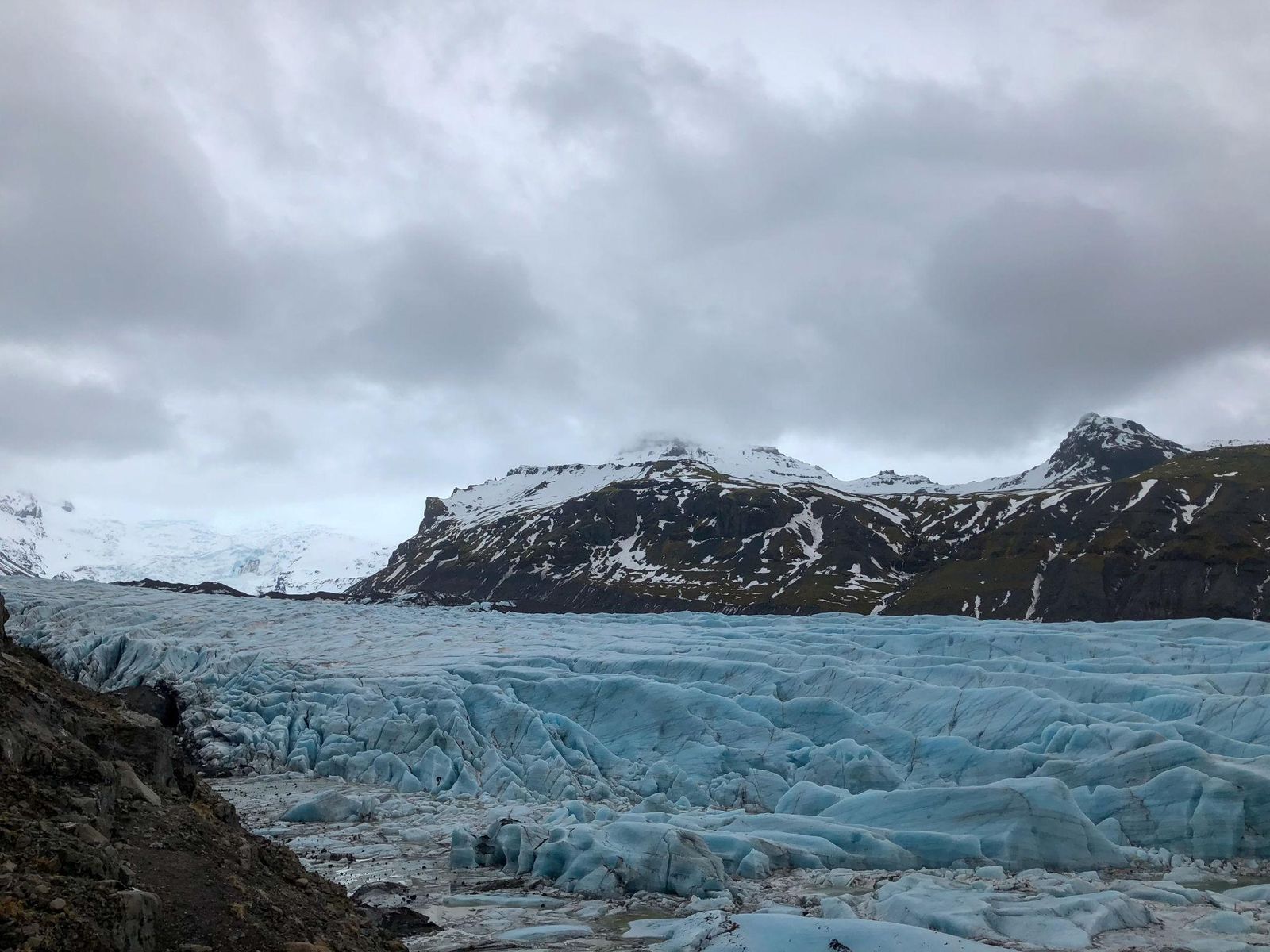
Iceland's natural ice caves can be visited in winter, roughly November to March, and only with a certified glacier guide. They sit inside the outlet glaciers of Vatnajökull in the southeast, and most trips leave from the Jökulsárlón or Skaftafell area. Every cave is new each season: summer meltwater carves them and then destroys them, so there is no fixed address you can drive to on your own.
One thing to be clear about up front, because people ask us all the time: none of our tours includes an ice cave. Here is how it works so you can book one with a specialist operator, and at the end, which of our tours get you close.
In summer, meltwater runs through the glacier and opens tunnels. When the cold sets in, the water stops flowing, the ice hardens, and those tunnels stay empty and stable for a few months. The deep blue comes from glacial ice being extremely dense, with very little air inside, so it absorbs almost every colour except blue.
Do not confuse it with two other things also sold as "caves":
| Period | What to expect |
|---|---|
| October | Some operators start if it turns cold early; unreliable |
| November – February | Main season; caves are usually most stable |
| March | Still possible, depending on temperatures |
| April – September | Natural caves closed by the melt |
Exact dates change every year and the cold decides, not the calendar. A mild winter can delay the opening or close a cave early. Some operators run caves on other glaciers, such as Kötlujökull near Vík, for more months of the year; check with them directly.
This is not red tape. It is common sense:
Serious operators provide helmets and crampons, cancel when conditions are unsafe, and refund or rebook you. If someone offers to take you "to a cave they know" without gear, say no.
Inside the cave it is not extreme, but the walk across the glacier and back can be. More in what to pack for Iceland in winter.
Because the caves are in the southeast, the practical move is to pair one with a trip that already gets you there. Our 3-day South Coast + Diamond Beach tour (€449, leaves every Friday morning, back Sunday night) covers the South Coast out to Jökulsárlón and Diamond Beach, and the 7-day Icelandic Experience includes a walk on the Sólheimajökull glacier, another way to stand on ice with a guide. Neither includes the cave itself, but if you want to add one on your own, send us your dates and we will tell you honestly whether it fits.
For more on the area, read our guide to Jökulsárlón and Diamond Beach, and for booking questions see the FAQ.
Natural caves, roughly November to March, depending on how cold each winter is. Outside those months the melt makes them unstable. Man-made tunnels and a few caves on other glaciers run for more of the year.
No. Caves change, can collapse, and reaching them means crossing the glacier. Always go with a certified glacier guide who provides a helmet and crampons.
No. Our tours do not include an ice cave. The 3-day South Coast tour reaches Jökulsárlón, near where many cave trips start, and the 7-day tour includes a Sólheimajökull glacier walk.
No. A lava cave is a tunnel of volcanic rock, open all year, like Vatnshellir on Snæfellsnes. An ice cave sits inside a glacier and only opens in winter.
Small groups, bilingual guides, free cancellation.
Iceland is in Schengen, not the EU. Which document you need on a Spanish or Latin American passport, what…
The famous blue one or the ritual by the sea. The real differences, what the volcanic activity on Reykjanes…
Ten days, a night in each region and all of Route 1: Golden Circle, glaciers, East Fjords, Mývatn, Akureyri and…
Tell us the dates and how many you are. Plan and price back today.