Regions
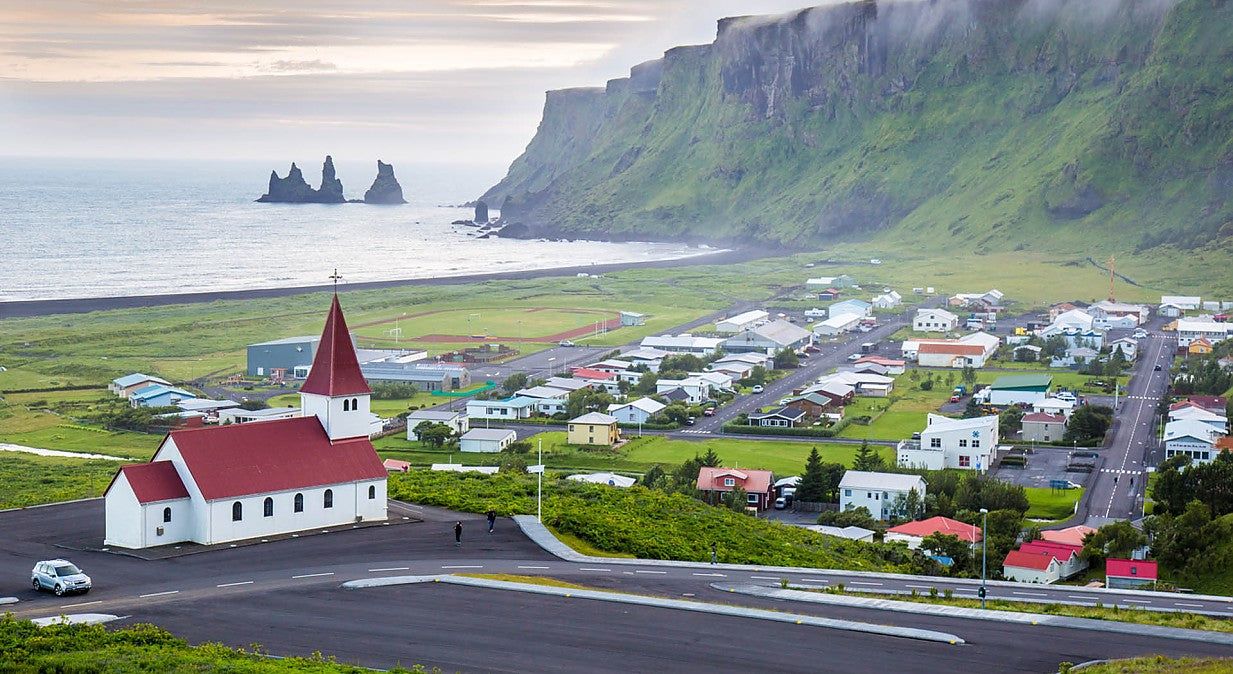
Vík, Iceland: What to See and Reynisfjara Safety
Reynisfjara, Dyrhólaey and Skógafoss: what is worth your time around Vík, how long to give it, and the one…
Lamb soup, skyr, the Icelandic hot dog and the infamous fermented shark. What people really eat in Iceland, told honestly.
The traditional Icelandic food really worth trying is simple: lamb soup (kjötsúpa), skyr, the Icelandic hot dog (pylsa), fresh fish and sweet rye bread. Then there is fermented shark (hákarl), which is more a dare than a meal. Icelandic cooking was born of necessity: a cold island with little farming, where fish and meat had to last the whole winter. That explains almost everything you will find on your plate.
If you only try one thing, make it this. Lamb, potato, swede, carrot and a broth that warms you from the inside after a windy day. Icelandic sheep spend the summer roaming free in the hills, and the meat has a mild, clean flavour.
You will find it at roadside cafés, village restaurants and in Reykjavík. It often comes with bread, and some places offer refills. It is one of the most affordable hot meals in the country.
It looks like thick yoghurt, but technically it is a fresh cheese made from skimmed milk: high in protein, low in fat. Eat it plain, with fruit, with granola or in desserts. Supermarkets stock dozens of flavours; try the plain one first, with a little sugar or jam.
It is the perfect breakfast or snack for a tour day, and one of the cheap foods that goes furthest.
Yes, the most famous dish of modern Icelandic food is a hot dog. And it makes sense: it is cheap in an expensive country, it is good, and it is sold everywhere, from the stand by Reykjavík harbour to any petrol station.
The sausage includes lamb as well as pork and beef. Order it "eina með öllu" (one with everything): raw onion, crispy fried onion, ketchup, sweet Icelandic mustard and remoulade. Don't overthink it.
Fishing has been Iceland's economy for centuries, and it shows. Cod, haddock and Arctic char are usually very fresh. Two dishes to look for:
Around Höfn, in the southeast, langoustine (humar) is the local speciality, though it is not cheap.
A dark, dense, sweet bread that was traditionally baked for hours in the geothermal heat of the ground. With butter and some smoked fish, or with trout, it is excellent. A few places near hot springs still bake it that way.
Honesty time. Hákarl is Greenland shark that is fermented and then dried for months. Fresh, it is toxic; the process makes it edible. The result smells of ammonia and has a rubbery texture.
Many Icelanders don't eat it day to day; it mostly appears at traditional midwinter feasts. If you try it, make it a small piece, with a shot of Brennivín, the local schnapps, as tradition says. Trying it once is fun. You don't have to like it.
In some tourist restaurants you will see whale or puffin on the menu. Most Icelanders don't eat them regularly, and much of that demand comes from visitors. Our advice is to order something else: there is plenty of lamb, fish and skyr.
Eating out in Iceland is expensive. Soup with bread, a hot dog or a lunch dish of the day are the most reasonable options, and the supermarket (Bónus, Krónan) is your best friend for breakfasts and picnics. Tap water is excellent and free. You will find more tips and rough prices in our posts on money in Iceland and how much a trip to Iceland costs.
On our multi-day trips we include some meals as part of the experience. The 10-day Gran Vuelta includes lunch in Vík, dinner in Akureyri and a farewell dinner. Complete Iceland, 14 days, includes 4 special lunches (including Vík and Snæfellsnes) and 2 special dinners (Akureyri and the farewell). Other meals are on you, and the guide can always tell you where to stop. See every trip on our tours.
Lamb soup (kjötsúpa) is probably the most representative dish and the easiest to find. Skyr and the Icelandic hot dog are the other two essentials.
Not at all. It smells of ammonia and many Icelanders don't eat it day to day. If you are curious, try a small piece with a shot of Brennivín.
Yes. A restaurant main course usually costs several thousand krónur. Soup of the day, hot dogs and the supermarket are the budget options.
The 10-day Gran Vuelta includes lunch in Vík, dinner in Akureyri and a farewell dinner. The 14-day trip includes 4 special lunches and 2 special dinners.
Small groups, bilingual guides, free cancellation.
Reynisfjara, Dyrhólaey and Skógafoss: what is worth your time around Vík, how long to give it, and the one…
In Iceland you pay by card for almost everything, tipping is not expected, and a few simple habits stop you…
Fourteen days cover the full loop, the Westfjords and Snæfellsnes without rushing.
Tell us the dates and how many you are. Plan and price back today.