Culture
Traditional Icelandic Food: What to Actually Try
Lamb soup, skyr, the Icelandic hot dog and the infamous fermented shark.
It is not about convenience. It is the difference between understanding what you are looking at and nodding politely for a whole day.
You can travel Iceland without speaking English. Millions do. But there is a wide gap between being able to do something and enjoying it, and that gap is usually language.
Anyone can order coffee in English. The problem shows up somewhere else.
You are standing at Þingvellir. The guide explains that you are walking through the rift between two tectonic plates, that this is where the world's first parliament met in 930, that the law was recited from memory off a rock because nobody could write, and that the lake in front of you is the largest natural lake in the country. That is four ideas in two minutes, in an Icelandic accent, in wind, with twenty people around you.
If your English is intermediate, you catch two of the four. And the two you lose are usually the good ones.
Questions. This is the big one. People do not ask questions in a language they are not comfortable in. Nobody raises a hand to say “sorry, can you repeat the bit about the plates?” in their third language in front of strangers. In their own language, they do. And the questions are where the trip actually lives.
Nuance. A guide can tell you “it is cold”, or can tell you “it is the particular cold here, which is not the number on the thermometer but the wind, so a good coat matters less than a windproof shell”. The second only survives in a language you command.
Safety. Less romantic, more important. The instructions at Reynisfjara about sneaker waves — waves that run thirty metres further up the beach than the one before, and have killed people — are not cultural colour. They are an instruction. It has to land first time.
The market is full of tours advertised as “in Spanish”. They are not all the same. Ask this:
At Amigos Iceland Tours the whole tour is told in Spanish and in English, with a local guide, and you can ask in whichever language you like at any point. It is literally why the company exists. That holds for a night on the aurora hunt (€99) as much as for the 3, 7, 10 and 14-day trips: they are all on our tours page.
Language solves half of it. The other half is how many people are there.
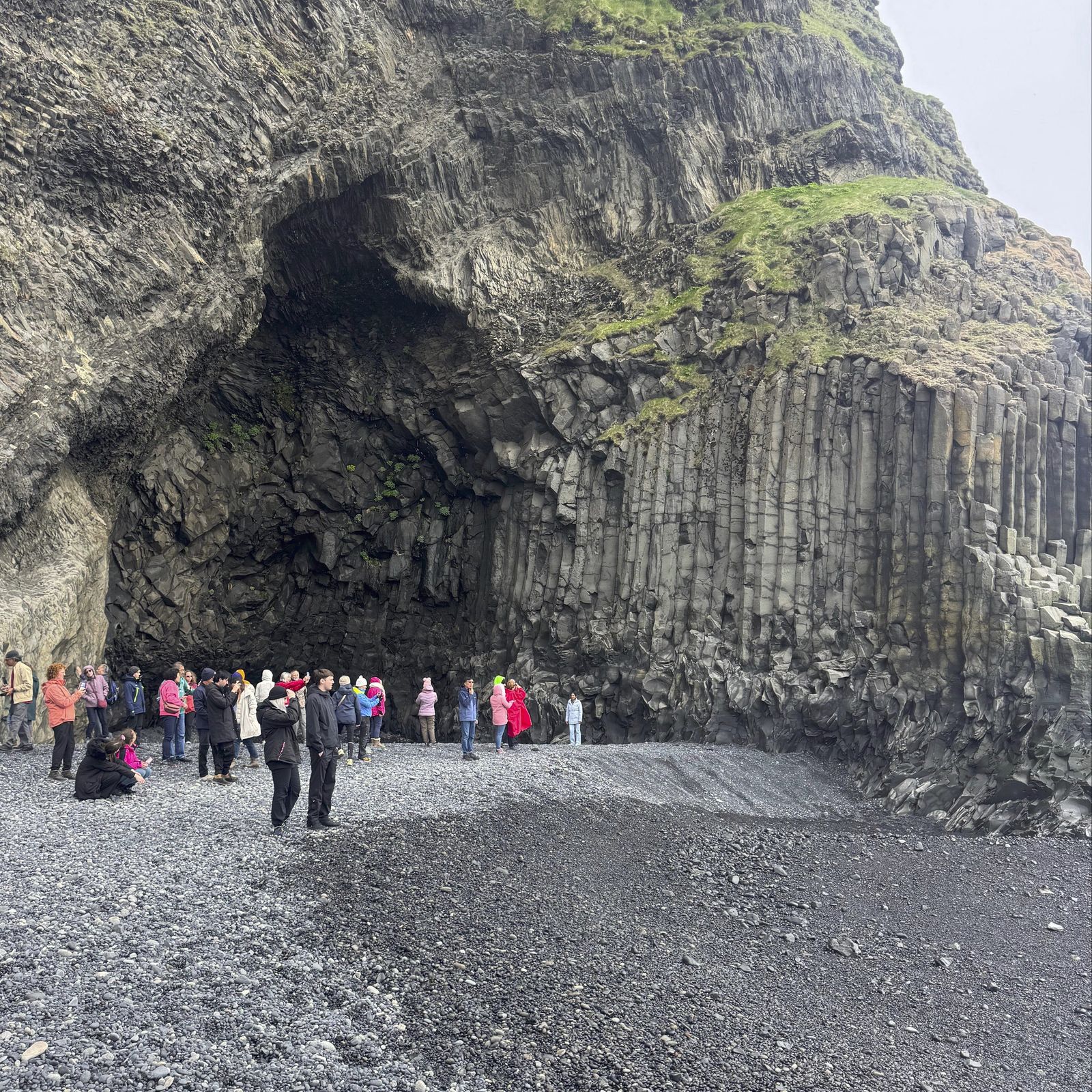
On a sixty-seat coach the guide speaks over a PA and nobody interrupts. In a van of eighteen, or eight, it becomes closer to travelling with friends: people ask, people laugh, people say where they are from. By the end of the day you know names.
There is a practical consequence too: a small vehicle can change route. If cloud closes over the south and the sky opens in the east, a van goes east. A sixty-seat coach on a contracted return time does not. It is exactly what we do on the aurora hunt: the guide picks the route each night from the cloud forecast and the solar activity.
A cheerful warning: the place names are not going to be translated. Jökulsárlón is Jökulsárlón, not simply “the glacier lagoon”. Eyjafjallajökull has no shortcut either. On the 10-day Grand Tour, which takes in Þingvellir, Reynisfjara and Jökulsárlón, you will hear plenty. A good guide teaches you to pronounce them and explains what they mean — jökull is glacier, foss is waterfall, vík is bay — and halfway through the trip you start decoding road signs on your own.
That is what a shared language does: it does not translate the country, it hands it to you.
It happens constantly: mixed couples, families, friends from different countries. That is why our departures are genuinely bilingual, not Spanish with subtitles. Everything is told twice, properly, and nobody is left out of the conversation.
Yes. Every departure runs with a bilingual guide and the whole tour is told in Spanish and in English. You can ask questions in either language at any point.
Not strictly: almost everyone in Reykjavík speaks English and signage is clear. But on excursions the guide's language decides how much of what you are seeing you actually understand.
Never more than 18, which is our legal maximum and we do not exceed it. If you'd rather travel with just your own people, we run private tours built around you: get in touch for the details. Booking and cancellation terms are in the [FAQ](/faq.html).
Small groups, bilingual guides, free cancellation.
Lamb soup, skyr, the Icelandic hot dog and the infamous fermented shark.
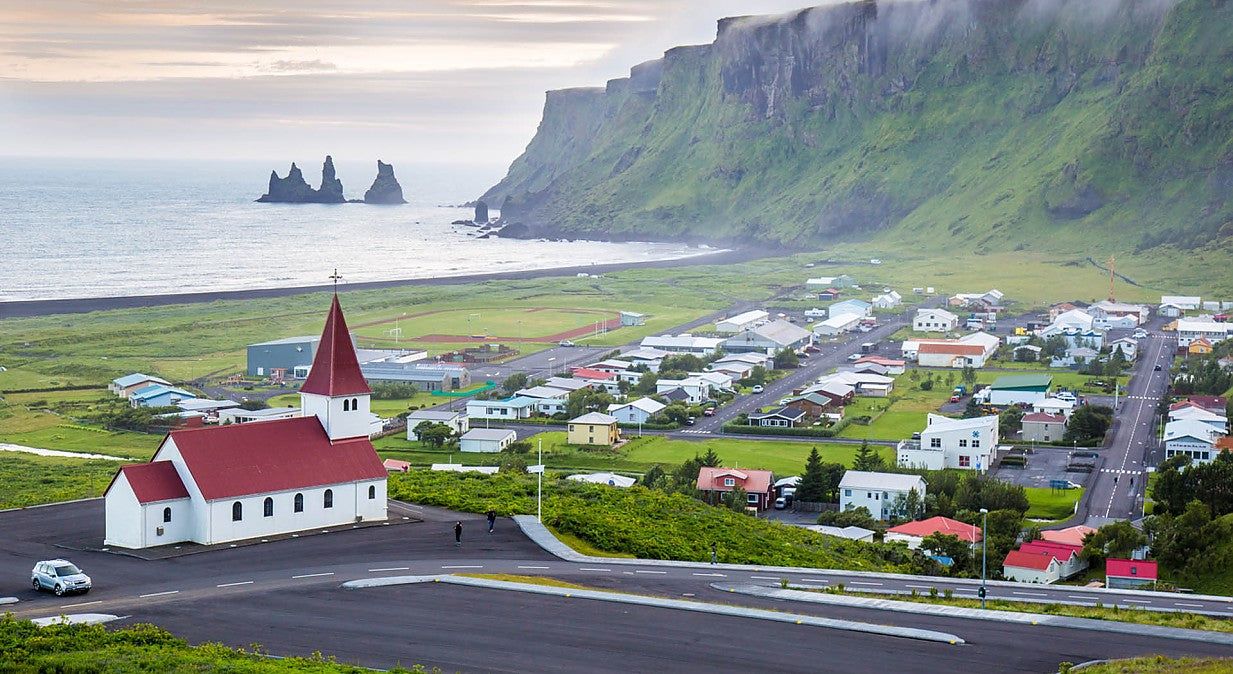
Reynisfjara, Dyrhólaey and Skógafoss: what is worth your time around Vík, how long to give it, and the one…
In Iceland you pay by card for almost everything, tipping is not expected, and a few simple habits stop you…
Tell us the dates and how many you are. Plan and price back today.